
July Water News

The Scoop on Poop:
How Dog Waste is
Dumping on Our Lagoon
Every day, Indian River County canines generate about 17,000 pounds of fresh dog waste scattered across yards, sidewalks, and parks. That's one school bus weight worth of excrement hitting the ground daily.
Our county houses over 12,000 licensed dogs. Add seasonal pups, unregistered mutts, and puppies under six months - we're talking serious canine “poopulation” density, perhaps as many as 23,000 dogs. Each furry friend produces roughly three-quarters of a pound of waste every single day.
Now comes the frustrating part. Studies reveal that 41% of dog owners simply walk away from their pet's deposits. They abandon the mess for someone else to handle. Or worse—they let rain wash it straight into storm drains and into the Lagoon.
Gross! And you know what else is gross? One pound of dog waste has 1.1 billion fecal coliform bacteria, viruses and parasites. When thunderstorms hit, this bacterial cocktail runs directly into the lagoon. The contamination doesn't stop there. Nitrogen and phosphorus from decomposing doggie waste feed toxic algae blooms that choke marine life.
Fortunately, this environmental crisis has a simple fix. Grab a bag. Pick up the poop. Toss it in the trash. Your small actions help! You're protecting fishing grounds for local anglers and swimming holes for families. You can help ensure that the Lagoon remains healthy for future generations.

2025 Legislative Tornado Rips through Florida’s Environment Funding
$100M for Indian River Lagoon funding slashed to $25M
$100M Florida Forever land acquisition funding slashed to $18M
$0 for Florida Communities Trust which provides matching funds for local government’s acquisition programs.
HB 1205 prohibits the right to gather petitions to change the Florida Constitution, ending Right to Clean Water effort.
$400M for Groveland Water Supply project clawed back
The repeal of the gaming compact distribution law will strip away an estimated $2 billion from land, water, resiliency and restoration programs over the next 4 years.
$250M for Florida Rural Lands Program that buys conservation easements on working farms.
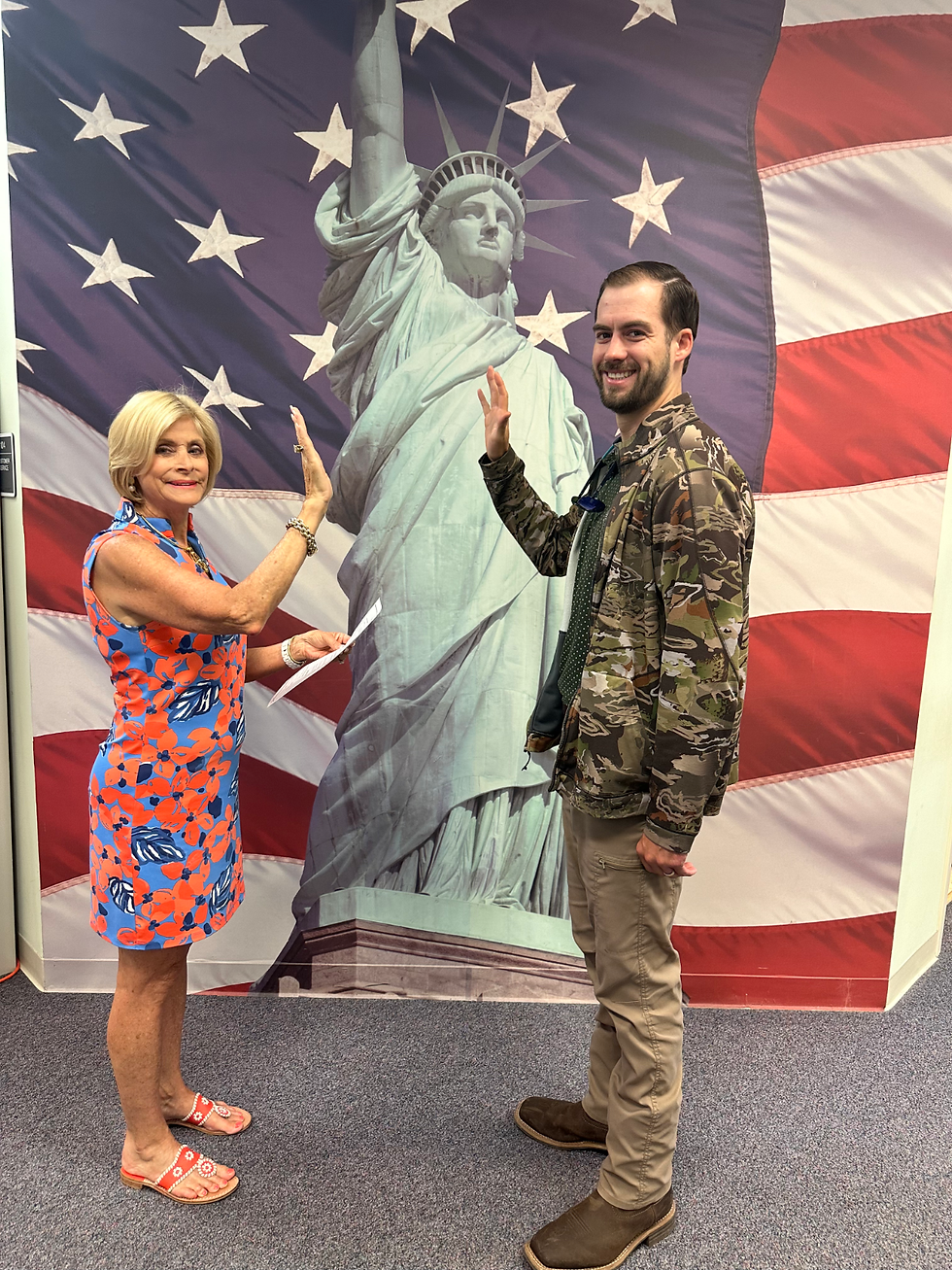
Honoring Our Former Board Members
The Clean Water Coalition would like to recognize and thank two outstanding former board members for their leadership, dedication, and impact on our mission.
Wayne A. Mills
Wayne A. Mills has been a passionate advocate for clean water and healthy ecosystems in his community. After working to restore the Chesapeake Bay, he brought that same dedication and experience to the Indian River Lagoon. Wayne has been actively involved in local efforts to protect the lagoon, sharing his knowledge and pushing for smarter solutions to improve water quality. Through his work with the Clean Water Coalition, he’s helped bring people and organizations together to speak up for the environment. We welcome his continued input as an Emeritus Board Member.
Thank you, Wayne, for your leadership and service with the Clean Water Coalition—you continue to make a lasting impact on our community.
Jean Catchpole
Jean Catchpole, former board member of the Clean Water Coalition, has been a thoughtful and committed voice for the health of the Indian River Lagoon. A longtime kayaker and nature lover, Jean brought both personal experience and practical insight to her advocacy. Whether raising awareness about the impacts of runoff after heavy rains or encouraging residents to follow seasonal fertilizer bans, she has consistently helped educate, using her compelling writing.
Thank you, Jean, for your dedication and service with the Clean Water Coalition—your work has truly helped protect the waters we all treasure.

Florida's War on Floating Junk:
New Rules for Derelict Boats
Abandoned boats don't just look awful, they're environmental time bombs. Picture this: a deteriorating vessel slowly leaking fuel and sewage into the lagoon’s waters while blocking safe navigation. That's exactly what's happening across Florida's waterways, including Indian River Lagoon.
Senate Bill 164 just changed the game completely. Starting January 2026, you'll need a free permit if you anchor in one spot for more than two weeks. Sounds simple, right? But here's where it gets serious. Violators now face escalating penalties that can reach felony charges. Three strikes within 24 months? Your boat becomes a public nuisance.
The numbers tell a brutal story. Removing one derelict vessel costs $750 per foot on average. A typical 32-footer? That's over $24,000 in cleanup costs that taxpayers ultimately shoulder. Last year alone, Florida spent nearly $13 million hauling rotting boats from our waters. And it feels like there’s always a steady stream of newly abandoned boats.
Cities such as Vero Beach have already ramped up enforcement efforts. The new state law simply gives them sharper teeth. You can help too: report derelict vessels by clicking on the link here. To view vessels already in process by FWC, click here. (Zoom in on IRC and you might be shocked at how many there are!)

Vero Beach is expanding the STEP (Septic Tank Effluent Pumping) sewer system to neighborhoods south of the city limits on the barrier island, aiming to phase out hundreds of septic systems that currently threaten the Indian River Lagoon. The system, which uses small-bore pipes and minimally invasive installation methods, significantly reduces nitrogen and other pollutants that fuel harmful algae blooms.
The Clean Water Coalition of Indian River County (CWC) is playing a key role in helping low- and moderate-income homeowners connect to the system, offering financial assistance that covers two-thirds of the cost through partnerships with the city, Economic Opportunity Council, Indian River Land Trust, and the Indian River Lagoon National Estuary Program.
Fishing Report
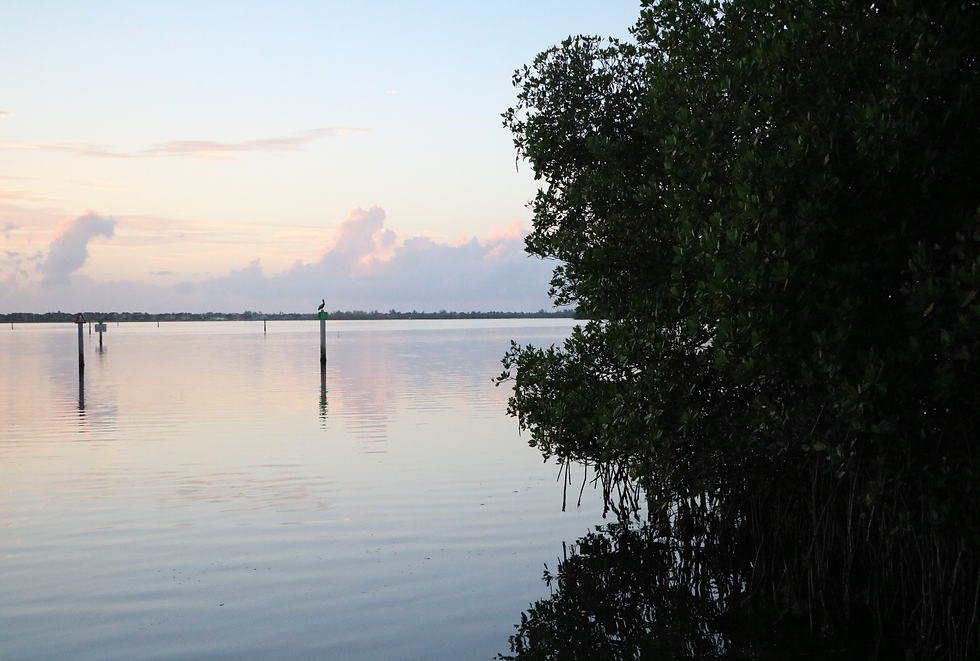
Mangrove snapper have been steady this month around the docks and channel edges, hitting live shrimp and small finger mullet up against the structure. Trout are biting at dawn over the grass flats, with live shrimp or pinfish working best and helping us keep unnecessary plastic out of the water.
Snook are stacked at the inlets and bridges on the tide changes: strictly catch-and-release through August, so handle them carefully and get them back in the water quickly. Tarpon are starting to roll in the backwaters and channels early and late in the day. Live mullet, the go to, if you’re looking for a big fight.
If harvesting to eat, please review Florida’s fish consumption advisories. Avoid pufferfish entirely. Limit predator species to recommended serving frequencies due to mercury. Be aware of emerging research on microplastics and other contaminants.

Indian River County has initiated Budget Meetings for Fiscal Year 2025/26. Workshops were held on July 9 and 10. A Tentative Budget Hearing is scheduled for Wednesday, Sept. 10, 2025 at 5:01 p.m. in the Commission Chambers. A Final Budget Hearing is scheduled for Wednesday, Sept. 17, 2025 at 5:01 p.m. in the Commission Chambers.
The County Administrator John Titkanich’s “message” regarding the recommended budget to the Board of County Commissioners cites:
Employee retention, recruitment, and compensation continues to be at the forefront while developing the FY 2024/2025 budget.
The total proposed budget is $524,719,875, a decrease of $107,923,737 or 17.1% from the current year.
The FY 2024/25 proposed millage rates remain unchanged from the previous year’s rates for the existing funds; however, an additional millage is being added for the Land Acquisition Bond 2024. The proposed Aggregate Millage rate is decreasing by 0.0109 mills or 0.18% to 6.1198 mills.
Indian River County’s General Fund millage rate ranks as the 6th lowest in the state.
Indian River County residents have stated repeatedly that their #1 priority is to preserve the natural environment since it is a vital component of our economy and quality of life. To preserve our environment; particularly in the light of current development pressures, CWC believes that the County needs an adequate budget to restore, protect, conserve, and effectively manage our natural resources.

Indian River County is rolling out an Integrated Water Master Plan as part of its new “One Water” initiative. The goal is to strategically manage drinking water, wastewater, and reuse systems over the next 20 years. These sessions are for your opportunity to provide input.
Upcoming Public Meetings – Get Involved!
July 23 @ Sebastian Library – 5:30–7:30 pm
July 24 @ BOCC Chambers – 1:00–3:00 pm
July 24 @ IG Center – 5:30–7:30 pm
Other upcoming events:
City marina workshop (July 18, 9 AM)
City budget workshops (July 23-24)

Forces of Nature – Clay Henderson
In this comprehensive history of land conservation in Florida, Clay Henderson celebrates the individuals and organizations who made the state a leader in state-funded conservation and land preservation.
Clay is an environmental lawyer, educator, and writer long involved in environmental policy in Florida.


Comments